
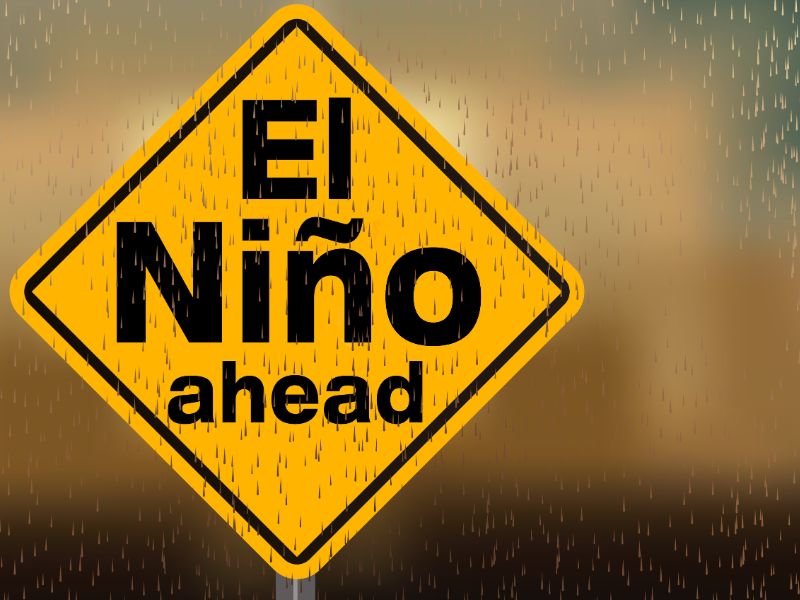
Australia’s weather bureau has officially declared El Niño underway. And forecasters are warning the climate driver could intensify into the strongest event recorded in the modern era.
The Bureau of Meteorology (BOM) confirmed on Tuesday (16 June 2026) the Pacific Ocean has now crossed critical atmospheric and oceanic thresholds used to define El Nino conditions. This has ended months of speculation about whether or not this system would fully develop. And experts say it now will.
The developing system follows years of unusually wet conditions driven by a succession of La Niña events.
What does this mean for us living, working or travelling Australia?
What is El Niño?
El Niño is a natural climate pattern characterised by the warming of ocean surface temperatures in the central and eastern tropical Pacific. It disrupts normal wind and atmospheric patterns, leading to widespread shifts in global weather. For Australia, this often causes drier and hotter conditions.
When will El Niño Arrive?
El Niño has arrived.
El Niño is an observation, not a forecast and forecasters are saying the Indian and Southern oceans are temporarily offsetting El Nino’s drying influence. Even though much of Australia has seen a wet start to the winter months, odds still favour a hotter and drier second half of 2026. Some are predicting it will be so harsh they are calling it ‘Godzilla El Niño’. Meteorologists are predicting this harsh monster will make 2027 the hottest year in history!
What does this all mean?
Warmer and dryer conditions will mean more heatwaves, lower rainfall, increased drought risk and potentially more severe bushfires. Australia is use to these conditions every summer however, meteorologists are predicting the El Niño will make the heat and fires more severe.
Who is affected by El Niño?
Everyone is impacted from El Niño. There can be major impacts on mining, agriculture, water supplies and everyday life across the country.
For the mining industry, weather patterns matter more than many people realise. Extreme rainfall, flooding and cyclones have disrupted iron ore and coal exports several times in recent years. All affecting production schedules, logistics networks and global commodity markets. While El Niño generally brings drier conditions to much of Australia, it can also contribute to more volatile weather patterns and elevated heat stress risks for workers across remote operations.
Agriculture is also expected to closely monitor conditions, with farmers across many regions concerned about potential reductions in rainfall and increased pressure on crops, livestock and water storage systems.
Us everyday people are also impacted. Food prices can be affected by El Niño conditions. The heat can be unbearable and energy costs higher as we try to keep ourselves cool. And bushfires can impact communities. It will affect everybody living, working and travelling Australia.
Warming oceans have also contributed to more frequent marine heatwaves and growing stress on ecosystems including the Great Barrier Reef.
So what should we do?
How to Prepare for El Niño?
Preparing for El Niño weather in Australia is worthwhile. Things to consider:
- Be aware of the weather conditions you are in. If at home, prepare your home for the conditions or if travelling, batten down the hatches or move on to somewhere safer. If at work, try to keep as cool as possible.
- Check your insurance and ensure (hope) you are covered
- Have an emergency plan. For instance, I live in a bushfire prone area on the outskirts of Melbourne. I have a bushfire plan for those extreme heat days. I also have a plan of battening down the hatches if a severe storm is pre-warned.
- Conserve water and food.
Source: Bureau Of Meteorology (BOM)

0 Comments