
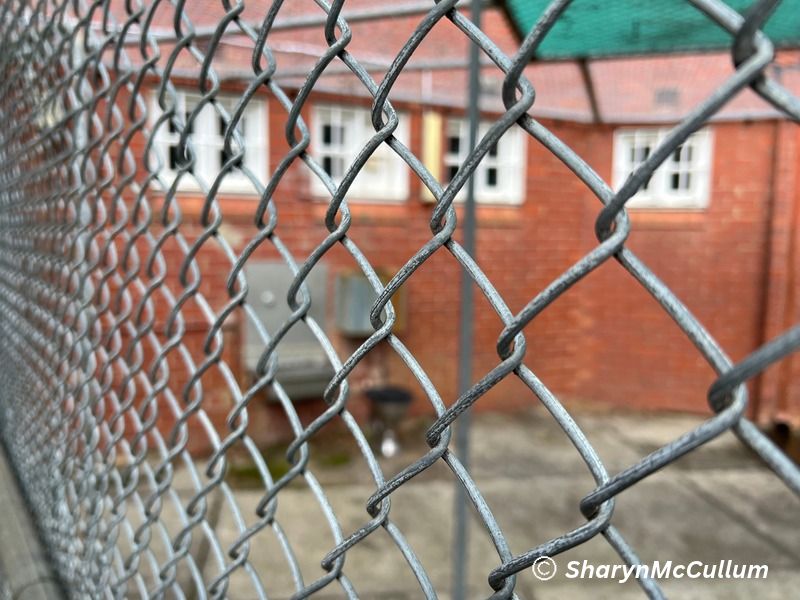
I had driven through Ararat a number of times while driving along the Western Highway linking Melbourne and Adelaide, but I had never stopped there. There are too many other notable places to stop like Ballarat, east of Ararat or the Grampians, west of Ararat. Then one time, needing a rest break from driving, we stopped at Ararat. And boy, were we surprised at what an interesting town Ararat is! And how a visit to J Ward was required.
Table of Contents
A little Ararat history
Ararat, like many towns in the region was built on gold during the Victorian gold rush between 1851 and the late 1860s. It was a time when many came to the region to try their luck at finding gold.
And gold led to the building of Ararat with its rich collection of 19th-century Victorian-era and gold-rush-era historic architecture. Buildings such as the Ararat Town Hall and the Ararat Court House will show you this architecture. And a walk, or drive along the Barclay Street Precinct will reveal many more gorgeous old buildings that today, house many modern businesses.
But with the influx of people unfortunately comes ‘bad behaviour and crime’. And thus Ararat needed a place for the ‘bad’ people to go. So, Ararat County Gaol was built. It opened in October 1861 and remained a gaol for some 25 years until it closed in December 1886.
Ararat was also home to a mental asylum, Aradale Lunatic Asylum. It was built in the 1860s to accommodate a rapidly growing population of people deemed ‘lunatics’ during the gold rush period.
Aradale was built as a three-part network of regional asylums. Aradale in the west (Ararat), a sister asylum in the east (Beechworth) and one in the south (Kew/Willsmere) a suburb of Melbourne.
Thanks to the massive influx of residents to the goldfields, Aradale became overwhelmed with ‘lunatics’. When the Ararat Gaol closed because people had moved on after the gold rush, there were still many lunatics at Aradale, it was decided to move the criminally insane. And thus the gaol became known as J Ward.
Nowadays, patients are gone but the buildings remain as a reminder of this period in Australian history. And now, you can tour these buildings and this was the main reason for our extended stop in Ararat.
A visit to J Ward is done by tour. I booked a tour for a day tour via their website. You can book one of their evening ghost tours via the website or here.
My Visit to J Ward
My visit to J Ward began outside the stone walls and front gate of the building. Already, I had a few chills run down my spine, and I was only doing a day tour, not a ghost tour. I wasn’t sure how I’d be after a couple of hours!
Start Outside that Big Door
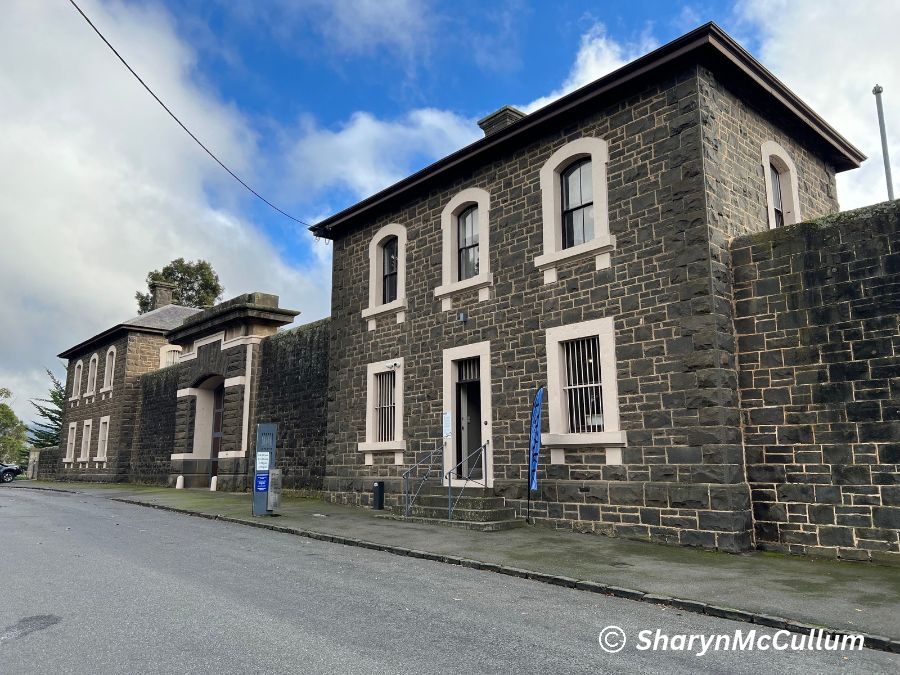
J Ward Front
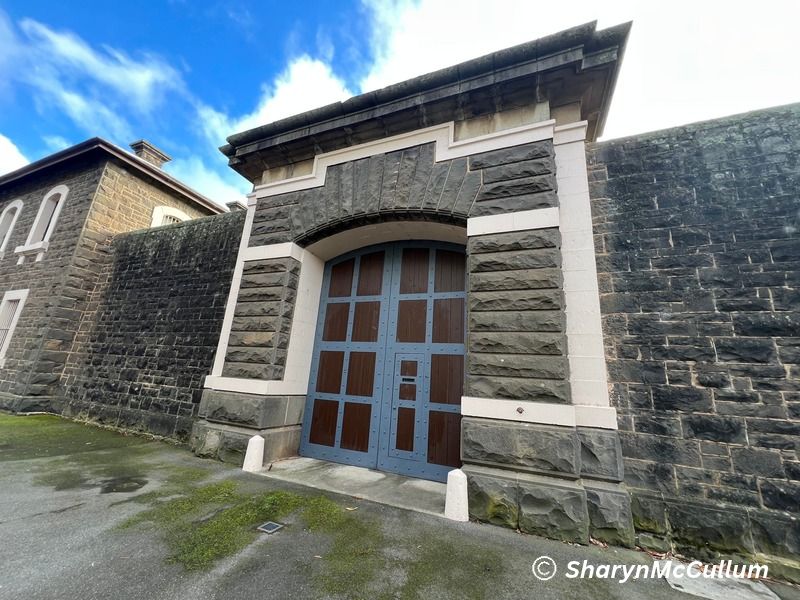
J Ward Front Gate
The Governor’s and Staff Area
Once inside those big doors, we waited in the waiting room for others to arrive for the tour. Our guide was a local, I think his name was John, and he was very knowledgeable imparting many facts about J Ward, its areas and previous residents that were both mesmerising and horrifying at times.
We began our tour outside with some buildings where the governor and his family lived along with the single man’s quarters, where the guards and nurses lived. Married staff lived in another building. These buildings and the courtyard area were a lot nicer than where the prisoners were allowed to go.
It was here we began hearing about some of the notorious criminals that called J Ward ‘home’. Such as Chopper Read, Gary Webb and Bill Wallace. And how others had ended up in this world of being institutionalised. Apparently, menopausal women were put into mental institutions by their husbands because symptoms of menopause were thought to be ‘madness’.
Within the courtyard is a shed with items donated by Dr Eric Cunningham Dax AO who In 1952, emigrated to Melbourne to take up an appointment as founding Chairman of the Mental Hygiene Authority of Victoria. He said “Mental hospitals were in a deplorable state of neglect and disrepair with many staff disillusioned and patients leading an asylum-like existence, often unoccupied, locked-up, sleeping on straw mattresses and badly clothed.
Dax was instrumental in introducing major reforms of mental health services including moving of psychiatric treatment from asylums to community settings and the
introduction of art programs for patients. One of the items he donated is the horse cart you can see in the shed.
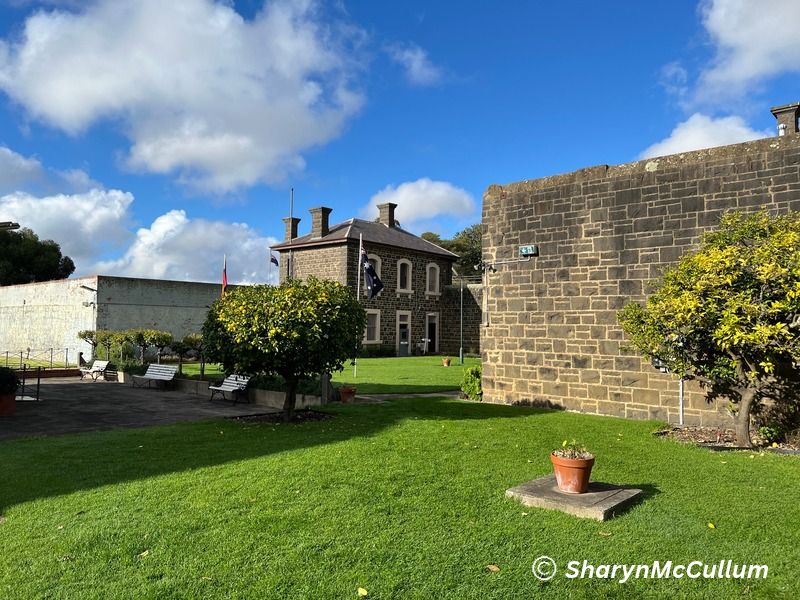
Governor house in nice garden area
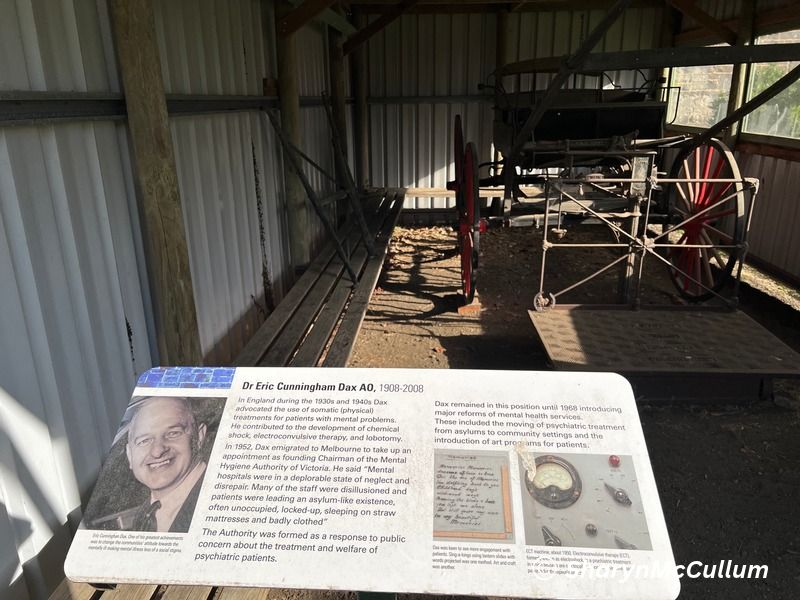
J Ward Shed
Into the West Wing
I was looking forward to this part of the tour. We headed indoors to the newer wing of J Ward and saw the prisoner’s bedrooms. Looking down the hallway there were a number of rooms leading off it. It just looked cold and sterile.
The rooms only have a bed with a blanket, pillow and a chamber pot. It seems prisoners were made to strip outside the room and slept naked so there was nothing they could hang themselves with. There were also no glass windows, windows were a metal covering that would be opened and locked at night. Apparently staff had to duck of a morning as many prisoners/patients would throw their chamber pots at staff.
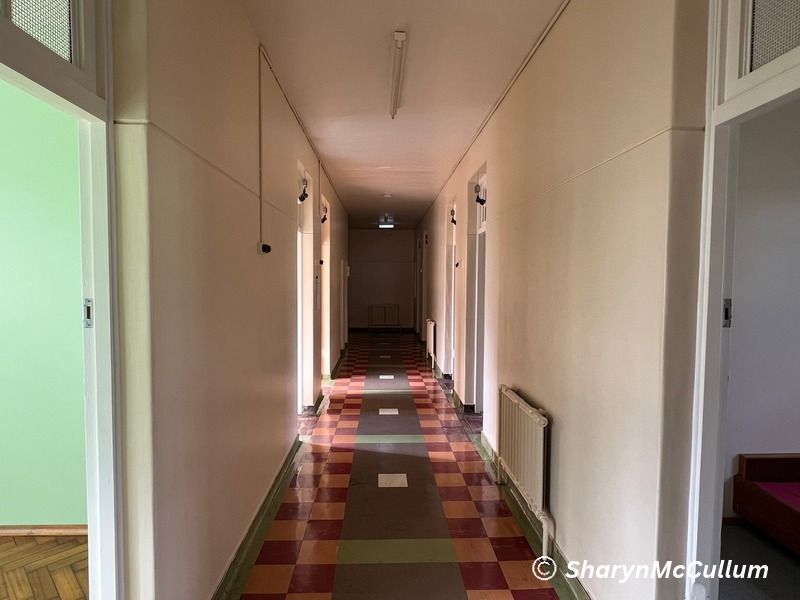
Hallway
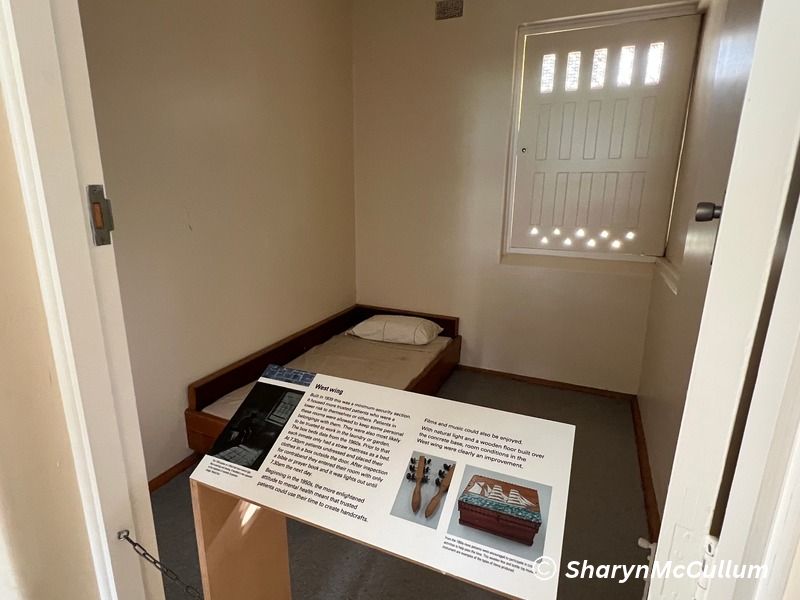
typical room off hallway
Over to the Bathroom and Outside Areas
Next we are off to the bathroom which was outside the main building. We walked through a fenced walkway to the bathroom. Inside was very open with tap handles removed so patients couldn’t hurt themselves, or others, with them.
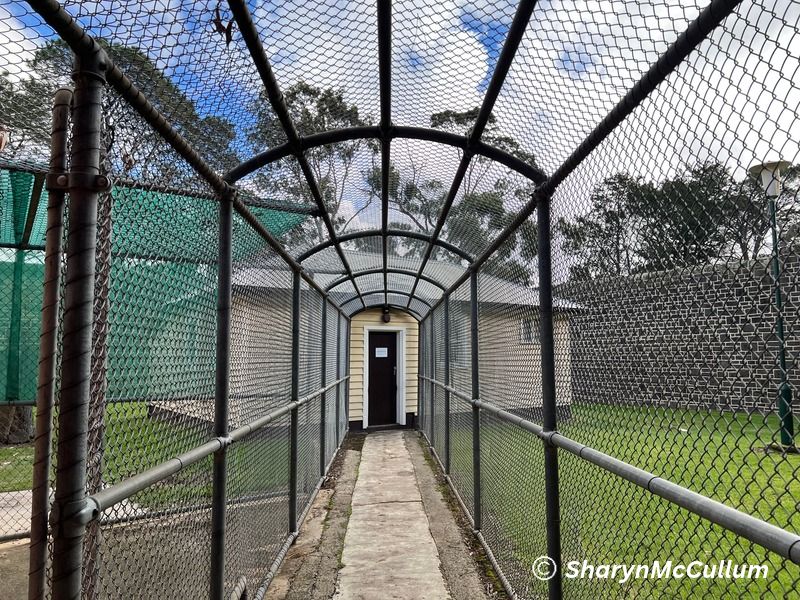
walk way to bathroom
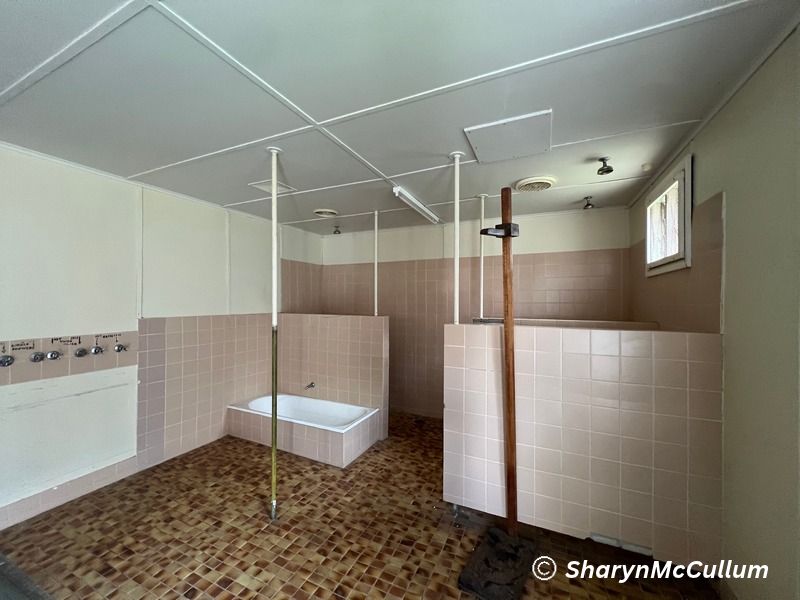
inside bathroom
Visiting the Exercise Yard and Guard Towers
After the bathroom we walked into the exercise yard and were able to climb one of the four guard towers. From the top of the guard tower we had a clear view of the ‘sunning wall’. This is a bluestone wall that in the afternoon received the sun so, prisoners firstly, then patients would stand against the wall to be warmed by the sun. When you look at the wall up close you will see the edges of the stones have been warn by people leaning against them.
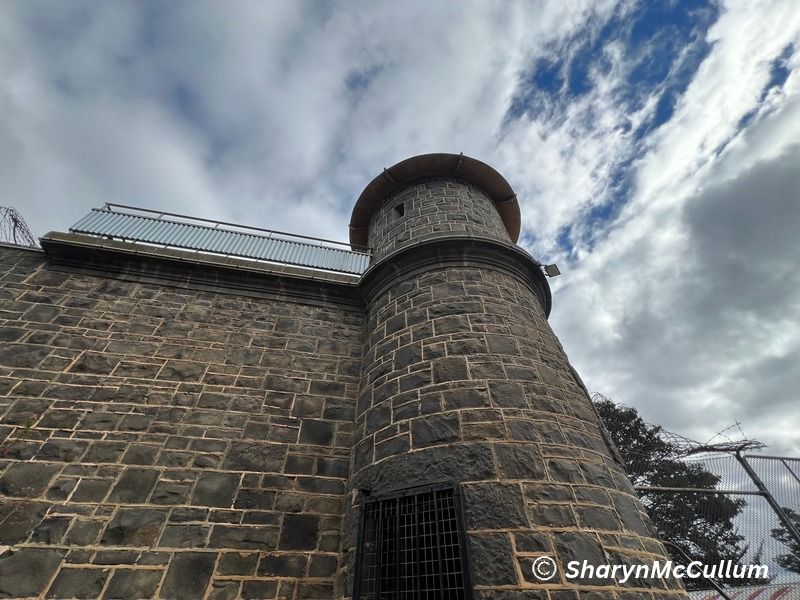
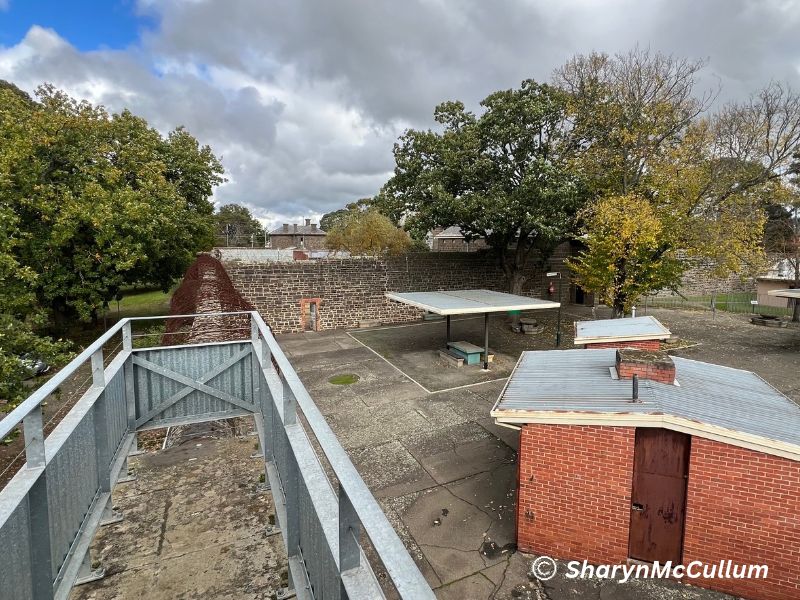
The Kitchen and into the Main Gaol Area
On experiencing being outside in the exercise yard we headed in doors to the kitchen which, looked like it should belong in King Henry VIII kitchen. From here, we ventured into the original old gaol area. There were similar cells as we had just seen but over over two levels. The haunting gallows hang at the top of the stairs which was used when it was a gaol. Three prisoners were hung and are buried within the grounds in unmarked graves.
I thought this area most interesting. We saw inside the small rooms the patients lived in. A small chapel was created for the prisoners in one of the rooms. We were then shown a demonstration of electroshock therapy which was a treatment used on the patients of J Ward. Apparently, it was done to patients in the middle of the main area so other patients could see! We also saw the straight jackets and other restraints used on the patients for extended periods of time. I felt so glad, that I hadn’t lived in this era and never gone mad as I don’t think I would have survived!
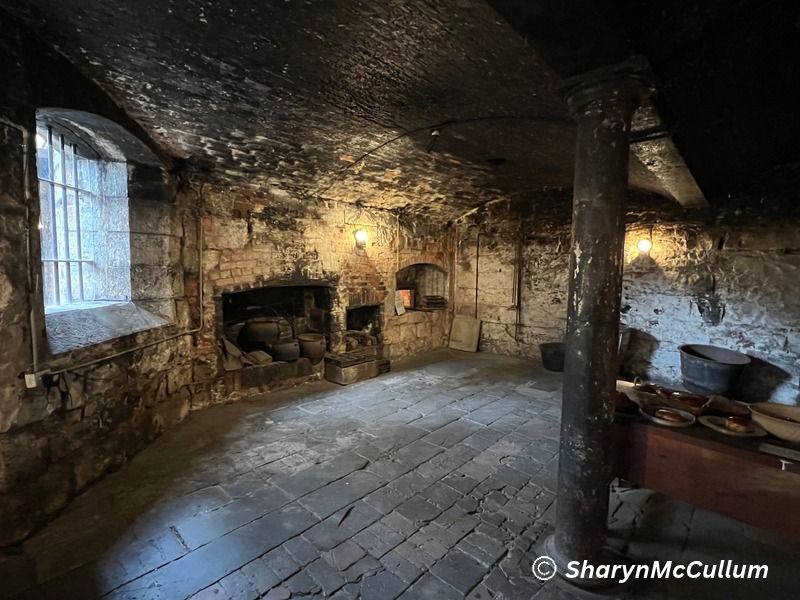
medieval looking kitchen
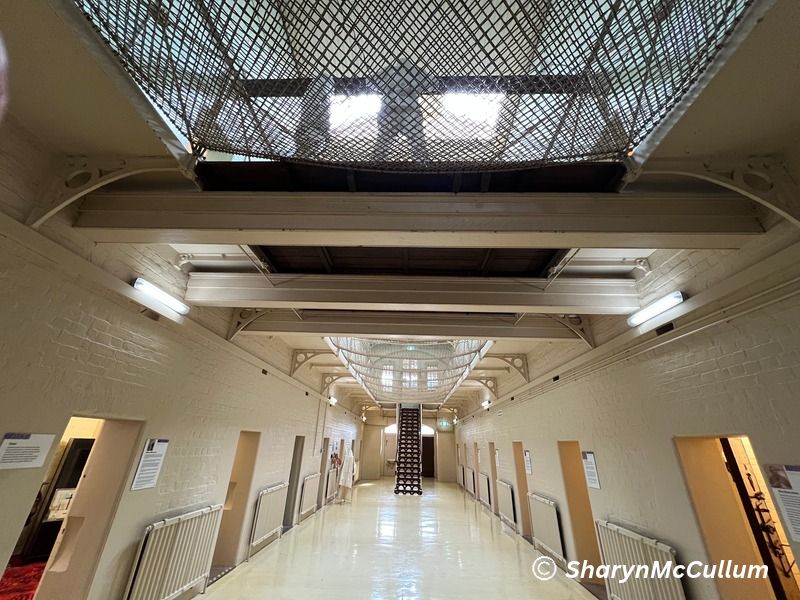
old gaol area
And so the tour ends
Our tour finished with us watching a short historical film on J Ward. On completion we left via a door linking us to a small museum and gift store.
Will You Visit J Ward?
So we survived, enjoyed and weren’t too scared by our J Ward visit so if you are visiting this part of Victoria definitely make time for a stop in Ararat. Had you heard of J Ward before today? Will you visit if you find yourself in Ararat?
I travelled to Ararat as part of my Great Southern Touring Route road trip which included a drive along the Great Ocean Road and a visit to the Grampians region. I have also travelled through Ararat on my way from Melbourne to Adelaide road trip.
Other unique places in Victoria to visit


Wow, what an interesting place to visit! I had no idea J Ward was originally a prison before becoming a psychiatric institution. Some of the stories about the patients and their living conditions are really disturbing. I can imagine walking through those old cells and seeing the gallows must have been quite an eerie experience. Definitely not a typical sightseeing stop!
The whole visit to J Ward was an interesting and at times eerie experience. But I’m glad I did the tour!
What a unique stop to stretch your legs. I think I’d want to take a day tour as you did (not the ghost tour).
We didn’t want to wait around for the ghost tour! And the older I get the less I like being scared!