

The Great Ocean Road is one of the best known stretches of road in Australia. You could say it is the best road trip in Australia and possibly the planet. The Great Ocean Road is a mere 243 km (151 miles) long and winds along some of the most rugged and picturesque coastline of Victoria. There are beautiful beaches, waterfalls, national parks with natural wonders and a lighthouse to discover. And now you want to drive along this fabulous road. Here is my ultimate 3 day Great Ocean Road itinerary to help you make the most of your time along this great drive in Australia.
This Great Ocean Road itinerary covers the best things to see and do while driving this iconic coastal route. I have driven the Great Ocean Road a number and each time just love it. If you are planning your self drive Great Ocean Road adventure as an independent road trip or as part of a big lap of Australia, read on, and get the details you need to organise your road trip along the Great Ocean Road.
I have divided this post into two sections. The first section comprising the most frequently asked questions about driving the Great Ocean Road. The second section is my ultimate Great Ocean Road 3 day itinerary highlighting the best Great Ocean Road things to see and do. And if you don’t have 3 days to drive the Great Ocean Road, at the end of the itinerary I offer a couple of alternatives. Tours to discover the Great Ocean Road if you don’t have a car or only have 1 day and a 2 day Great Ocean Road itinerary. So put on your seat belt, and get ready to drive one of Australia’s best road trips – the Great Ocean Road.
Table of Contents
Great Ocean Road Frequently Asked Questions (FAQs)
About the Great Ocean Road – When Was it Built & Why?
The Great Ocean Road was built after the First Wolrd War ended. It was built between 1919 and 1932 to provide many of the returned soldiers with a job. The road is dedicated to the soldiers killed during the war and those 3000 or so returned soldiers who built it. There is a memorial to them at the east entrance of the road. And this is where this 3 day Great Ocean Road adventure begins. Do take time to stop at the east entrance, not only for a photo, but to discover some of the history behind the road.
Where does the Great Ocean Road Start & End?
If you are wondering where the Great Ocean Road starts, well officially, The Great Ocean Road starts at Torquay. Though the entrance gate, which is a great photo opportunity is further along from here. The Great Ocean Road finishes at Allansford near Warrnambool.

East Entrance Gate to The Great Ocean Road

Statues of men building the Great Ocean Road
Is 3 Days driving the Great Ocean Road Too Long?
Of course not, 3 days is a perfect Great Ocean Road touring route length of time to let you discover all there is to see and do along the Great Ocean Road. However, if you don’t have 3 days you can condense this itinerary to 2 days driving the Great Ocean Road. You could condense it to 1 day driving the Great Ocean Road, but this will be a very long day. The road is very windy and you will be hopping in and out of the car regularly at all the sites. I found 3 days driving the Great Ocean Road to be the best amount of time.
How Long is The Great Ocean Road?
The Great Ocean Road is 243km (148 miles) long. It hugs the coastline for most of the driving time and is windy. To be honest, after three days of winding roads I was pleased to be driving on straight roads.
How Far is Melbourne to The Great Ocean Road?
Melbourne’s CBD to the beginning of The Great Ocean Road at Torquay is around 105km (65 miles) and can take around 1 hour 30 minutes to drive. Factor this time, dependent on the traffic, into your driving time.
How Long Does it Take to Drive the Great Ocean Road?
If you drive the Great Ocean Road with no breaks, you could drive it in around 4 – 5 hours. But why would you? There are so many beautiful places to see and many great things to do along the road, that you would be completely nuts to miss! This is why I would suggest a 3 day Great Ocean Road self driving itinerary as a minimum.
Which Way Should You Travel Along the Great Ocean Road?
Most who do a Great Ocean Road road trip drive it east to west. Starting in Torquay and travel westbound to Port Campbell. Driving it this way means you will be on the left side of the ride and closer to the ocean. You will have great views of the landscape without having any cars passing you the other way. Many then return to Melbourne via Colac. You can drive the Great Ocean Road eastbound. Starting from Allansford, near Warrnambool, but you will be driving closer to the cliff faces and have cars buzzing past you, sometimes blocking your view as you drive. There are many pull-out sections along the road where you can stop for great views of the coastline but mostly when driving east to west. But it is up to you which way you travel. Both ways are great.
Can You Drive The Great Ocean Road in One Day?
Sure you can drive the Great Ocean Road in one day. Most day trippers and bus tours do a round trip from Melbourne. However, the day will be rushed and long if you plan on seeing all there is to see. One day driving the Great Ocean Road will mean you will need to miss many things. A two Day road trip itinerary of the Great Ocean Road is a good length of time but a three day itinerary will allow you to see everything and do things without being rushed. If your aim is to see the 12 Apostles, if you start your day in Torquay, you won’t see them until mid to late afternoon on a way day drive. If you only have one day, travel inland via Colac to Port Campbell, then you will see the 12 Apostles first.
When is the Best Time to Visit The Great Ocean Road?
Anytime is a great time to visit the Great Ocean Road. It is available all year round to travel along. However, some months provide better experiences.
Summers Months: December – February
The summer months are peak season for a drive along The Great Ocean Road and it sees the population swell in many of the major towns. This is due to the number of Australians who spend their summer holidays enjoying the coastal life. Summer time will be hot but generally the weather is great for the laid back beach life.
Winter Months: June – August
The winter months sees very cold windy weather along the Great Ocean Road. But this weather is a good example of how the dramatic coastline has been created. The winter months are the low season for visiting and the road is less crowded. This is also the only time of year that you get the chance to see the southern right whales during their migration. One of the best places to see the whales is Logans Beach in Warrnambool which could be your first stop after finishing this 3 day Great Ocean Road itinerary.
Spring and Autumn Months: September – November and March – May
The weather is quite good in the Spring and Autumn months and there are less crowds than during the peak Summer season and more than during the Winter season. Spring and Autumn are great times to drive the Great Ocean Road.
How to Travel The Great Ocean Road
The best way, and the only way to travel along the Great Ocean Road is by vehicle. This could be in a car or bus or on a motorbike. If you don’t own a vehicle then you can easily rent one from car rental companies. To see what is available and to get the latest pricing on a rental check here. As the Great Ocean Road is a sealed road, you can drive it in a 2WD. If you want to sit back and relax in the comfort of a bus and watch the scenery unfold there are Great Ocean Road day tours available. Have a look at tours following.
But before you check out the tours of the Great Ocean Road, keen hikers might be interested in The Great Ocean Walk. I haven’t done this myself so can’t tell you much about it. I believe it is a moderate walk taking around 8 days to walk 100km starting from Apollo Bay and ending at the Twelve Apostles. It hugs the coastline and offers fabulous views.
Where to Stay along the Great Ocean Road
Accommodation available along the Great Ocean Road is diverse. It ranges from camping grounds to hostels to hotels to beach houses with spectacular ocean views. There is plenty available. However, in the summer months, particularly during school holidays it is advisable to book your Great Ocean Road accommodation in advance. This is because the towns along the Great Ocean Road are popular Australian holiday spots. I have included accommodation suggestions under each night’s stop to help you out.
My Top Tips for Driving the Great Ocean Road
* Plan Your Route and Take Your Time
As you will have read in my guide to driving the Great Ocean Road, there is plenty to see and do. Knowing in advance what you want to do and see will help you plan your route and enable you to work out the time you need on the Great Ocean Road. The Great Ocean Road shouldn’t be rushed in my opinion!
* Book Accommodation in Advance
To be honest, I don’t always book accommodation in advance as I often wing it. I haven’t always been lucky and this has led me to sleep in my car. As part of planning your Great Ocean Road itinerary pre-book your accommodation. It means you won’t have to drive through each town looking for a place to stay, particularly during the busy summer months.
* Pack for all 4 Seasons
The Great Ocean Road is a coastal drive and as you will see it has been carved by extreme weather conditions which exist today. And you cannot predict the weather, it can change. This means you need to be prepared for all weather and pack for all four seasons. Things I suggest you pack are swimwear, a good pair of walking shoes, a waterproof jacket, jumper and a beanie.
* Drive on the Left
In Australia, we drive on the left. Also Respect the Speed Limit ranging between 50km (31 miles) per hour to 100km (62 miles) per hour. Follow the speed limit signage and keep to the right speed. At the same time, drive to the conditions of the road. There are lots of twists and turns which can be challenging. Depending on the weather, the road can be slippery and it can be quite dark under the canopy in the Otway Ranges. There are also plenty of slow lane turnouts you can pull in to to let those faster vehicles past – and there are always idiots who think the road is a racetrack! Start you time on the Great Ocean Road with a full tank of petrol. Petrol stations on the Great Ocean Road are often small and a little more expensive than less remote areas. Also check your vehicle before hitting the road, simple checks of the oil, water and air pressure of your tyres can help keep your vehicle performing.
* Stay Alert for Wildlife
The Surf Coast, Cape Otway National Park and the Shipwreck Coast are home to plenty of wildlife – and they can appear any time.
* Take some snacks for the drive
Yep, snacks while driving are always a good thing, particularly if you are driving the Great Ocean Road with kids.
* Take your trash with you
Take your own rubbish bag and get rid of your rubbish appropriately.
3 Day Ultimate Great Ocean Road Itinerary at a Glance
Days
1 – Torquay, Bells Beach, Lorne
2 – Lorne, Otway Ranges, Apollo Bay
3 – Apollo Bay, Port Campbell National Park (12 Apostles), Shipwreck Coast, Warrnambool
Let’s Get This 3-Day Great Ocean Road Itinerary Started
Day 1 – Melbourne – Torquay – Bells Beach – Lorne
Distance Melbourne to Lorne: 141km (88 miles) roughly 2 hours depending on traffic.
Distance Torquay to Lorne: 48km (30 miles) roughly taking 50 minutes to drive direct but with all the great places to see, you will be hopping in and out of your vehicle and this will take all day. Or as long as you want it to take!

Me at Bells Beach Sign along the Great Ocean Road
There are a couple of ways to leave Melbourne for the Great Ocean Road and the way you take will depend on what part of Melbourne you are leaving from. If in Melbourne city you will travel over the Westgate Bridge, drive along the Westgate Freeway, by-pass Geelong and arrive at your first stop of the seaside town of Torquay. Or you can take the M1 Ring Road around Melbourne and come down the Princes Highway. Just follow the signs when nearing Geelong as you will veer away from the city and head towards the Surf Coast. Unless you want to explore Geelong and the Bellarine Peninsula for a day or weekend before your Great Ocean Road self drive holiday.
Torquay
Torquay is at the east end of the Great Ocean Road and is the start of the Great Ocean Road. It is a quaint town with great beaches, coffee shops and a vibrant beach-side atmosphere. There is excellent shopping of ‘surf’ brands like Rip Curl and Quicksilver at their factories nearby. So you could take a dip in the ocean, maybe learn to surf, do some shopping in the quirky shops or sit in a coffee shop. It is also home to the Australian National Surfing Museum to get you in the mood for the next stop, Bells Beach.
Bells Beach is famous for great surf and hosts the pro surfing competition every Easter. If you are at Bells Beach over Easter you too could see the world’s best if you want to fight the crowds. If not, the beach is accessed by steep stairs so I hope you are feeling fit?
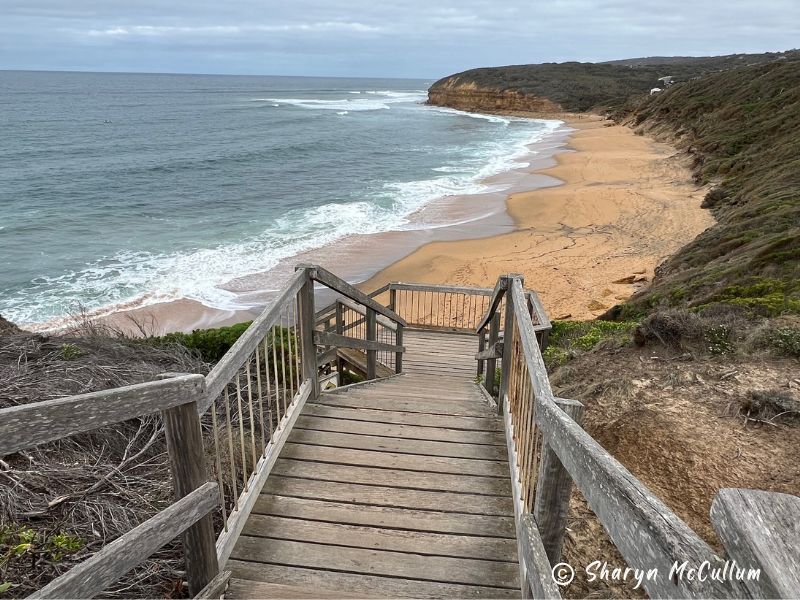
Steep stairs to Bells Beach
Did the stairs at Bells Beach make you a little thirsty or in need of a sugary pick-me-up? Then follow the signs to the Great Ocean Road Chocolaterie and Ice Creamery, a sister store to the Yarra Valley Chocolaterie and Ice Creamery. Once refreshed you will begin your drive again along the Great Ocean Road and pass through a number of towns.
Anglesea
Anglesea is the next town and has a great lookout, Anglesea Lookout Reserve to visit for great ocean views over the area. The lookout also has information boards about the area including history of the wreck of the ‘Inverlochy’, which was shipwrecked not far from the Anglesea River mouth. You are also at the beginning of what is known as ‘Shipwreck Coast’ for the vast number of shipwrecks that occured along this section of Victoria’s coastline. As you progress along the Great Ocean Road you will learn about many shipwrecks and will see for yourself why there were so many with the wild weather that has formed the coastline.

Inverlochy buoy at Anglesea Lookout Reserve
Aireys Inlet
Back in the car and driving you will see a lighthouse appearing in the distance. This lighthouse is in Aireys Inlet and is the Split Point Lighthouse which you can visit while in Aireys Inlet. Known as the ‘White Queen’ of Aireys Inlet it featured in the kids TV show ‘Around the Twist’. What a great show that was!
On leaving Aireys Inlet on your way to Lorne, you will see the ‘house on a stick’, known as the ‘Pole House’ along with plenty of other gorgeous houses built on the cliff faces with fabulous views over the ocean. The Pole House is the most photographed house on the Great Ocean Road. It is suspended 40 metres above Fairhaven Beach and yes, it is available for rent.

House on Stick ‘Pole House’ after Airys Inlet with Split Point Lighthouse in the distance, on the way to Lorne
Lorne
Lorne is another beachside town and is a very popular surfing spot. It has a well-known arts community. You might want to visit a gallery and the sculpture park. Head up to Teddy’s Lookout providing sweeping views over the town and along the coast. Take a drive in to the state park to visit Erskine Falls. Set amidst a rainforest with ferns and Bell Birds take the easy walk to the beautiful waterfall.
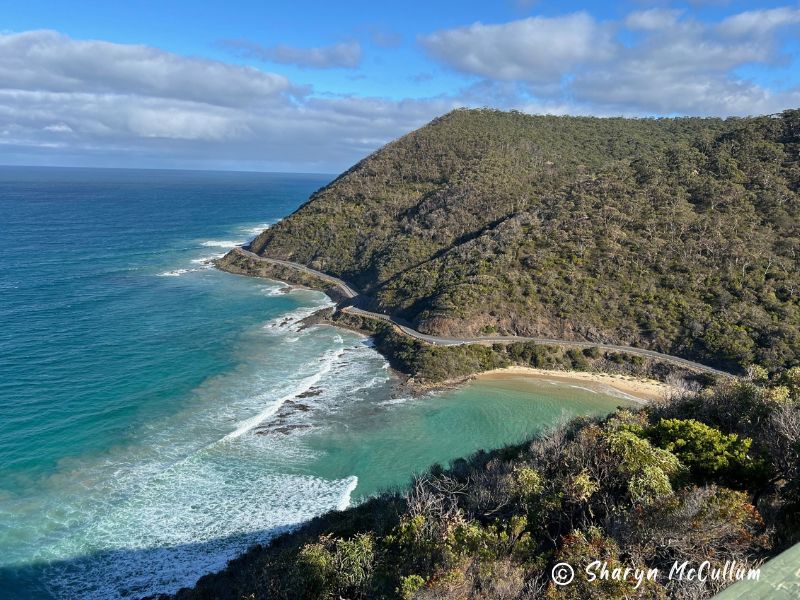
Teddy’s Lookout provides sweeping views over the Great Ocean Road

Erskine Falls behind Lorne
Lorne is where day 1 of this Great Ocean Road drive ends today. There are plenty of restaurants and cafes to get a bite to eat to end a wonderful day driving the Great Ocean Road.
Accommodation in Lorne on Night 1
Lorne has plenty of accommodation available. You could take a drive through the town and see what takes your fancy or you can book ahead. If seeking budget accommodation I can highly recommend the Great Ocean Road Backpackers if looking for a bed in a hostel. If towing a caravan driving a van check out the Lorne Foreshore Caravan Park. For a little more upmarket try the Mantra Lorne. For more options visit Booking.com.

Lorne township
Day 2 – Lorne – Otway National Park – Apollo Bay
Distance Lorne to Apollo Bay: 45km (27 miles) roughly taking 55 minutes if you drive direct. Like yesterday, why drive direct when there are so many great places to see.
Leaving Lorne follow the coastal road through small towns of Separation Creek, Wye River and Kennett River before reaching Apollo Bay for the morning.
Apollo Bay
Apollo Bay is a popular holiday spot along the Great Ocean Road with many renting holiday homes, particularly during the summer months. Just before reaching Apollo Bay, our next stop on this 3 day Great Ocean drive, is the Old Cable Station Museum. This was once the only connection between Australia and Tasmania. The museum looks like a house and you can easily drive straight past it. Other things to see and do in Apollo Bay include getting great panoramic views over the ocean from Mariners Lookout. Perhaps while in Apollo Bay check out The Bass Strait Shell Museum. My kids were especially enthralled by seeing all the shells here. You can also walk along the main street and check out boutique stores and enjoy a meal in a cafe. If it is a warm day, perhaps you would like to dip your toes in the ocean. I hope you brought a towel on this road trip! And don’t forget to visit the Port of Apollo Bay where you can enjoy some great fish and chips at the Fisherman’s Co-Op! Or perhaps visit the Apollo Bay Bakery for one of their famous scallop pies. Follow this by an ice cream from Dooley’s Premium Ice Creams!

Old Cable Station Museum looking like a seaside house

Apollo Bay Seafood Co-Op – great for lunch or dinner
Otway National Park
From Apollo Bay drive into the Otway National Park to spend the afternoon. The Great Ocean Road heads inland here. You will be driving through beautiful rainforests with towering Mountain Ash and lush ferns. This national park is home to a 57-mile hiking trail, California Redwoods forest, numerous waterfalls and abundant native wildlife. You may see many koalas in the trees as you drive through the Otways. Even learn about Aboriginal history and dinosaur fossils at Dinosaur Cove. You can walk around the area visiting the buildings to learn about the area, including dinosaur fossils that have been found. If feeling energetic climb to the top of the Cape Otway Lighthouse. Well worth it to see where Bass Strait meets the Southern Ocean.
The adventurous might want to go on the Otway Fly Treetop Adventures where you can walk above the tree tops or zipline through them. The Otway Fly Treetop Adventure is about 1 hour north of Apollo Bay. Not in the same direction as the Cape Otway Lighthouse.
Then back to Apollo Bay for the evening as there is not much accommodation available in the Campbell National Park, where we are tomorrow on the third day of this 3 day Great Ocean Road drive.

drive through rainforests in Cape Otway NP

Cape Otway Lighthouse provides magnificent views of the Australian coastline
Accommodation in Apollo Bay for Night 2
There are a number of accommodation options available in Apollo Bay from hostels to budget hotels to resorts. If you are wanting a bed in a hostel check out Apollo Bay Backpackers. For budget hotel accommodation check out Apollo Bay Guesthouse. Visit Booking.com for more accommodation options in Apollo Bay.
Day 3 – Apollo Bay – Port Campbell National Park – Warrnambool
Distance Apollo Bay to Warrnambool: 158km (98 miles) roughly taking 2 hours and 15 minutes to drive if driving direct. But why would you? This part of the Great Ocean Road is one of the most popular parts as you will find the 12 Apostles here.
Port Campbell National Park & Shipwreck Coast
Some might say, this part of the Great Ocean Road is the ‘best part’ of the GOR and what they have come to see. Today, day 3 of this Great Ocean Road drive will see you in and out of your vehicle stopping to see many natural wonders that are along this Victorian coastline. Mother Nature has done some of her best work here. Towering limestone cliffs, blowholes and archways carved by her untamed force over thousands of years.
From Apollo Bay take the long and windy drive to the Twelve Apostles Marine National Park. This is a must see stop with spectacular coastline where you will see the Twelve Apostles plus many more nature-made landmarks. The parking for the Twelve Apostles is on the right and you then walk under the road to the viewing platforms and information centre. You may want to take a helicopter ride to truly appreciate the area. My son and I did this, read taking a helicopter ride over the Twelve Apostles here. Or perhaps descend the 86 cliff carved steps, known as Gibson Steps to Gibson Steps Beach to be at eye level with the apostles.
Next stop on from the Twelve Apostles is Loch Ard Gorge where you can walk along the platforms down to the beach. Here you will discover about the the shipwrecks that happened along the coastline, particularly the Loch Ard that occurred. Yes, it’s not called the Shipwreck Coast for nothing! Leaving the Gorge drive through Port Campbell and on to London Bridge. London Bridge is a natural arch which unfortunately due to erosion has now been separated from the mainland. Spectacular all the same.
Just on from Port Campbell are some more stops along the Great Ocean Road worth visiting. Particularly the Bay of Islands with its many geological formations and with names like Massacre Bay, Bay of Martys and Wild Dog Cove. The coastline is just wild here, shear cliff faces created by the weather.

The Twelve Apostles – actually some have fallen and there is currently 8

12 Apostles from the Air

Loch Ard Gorge on Shipwreck Coast
From London Bridge or Port Campbel take roads back to Melbourne. It will take you a few hours to get back there. Or you could continue to the end of the Great Ocean Road at Allansford near Warrnambool for the night. If open, you could pop into the Allansford Cheese Factory. Warrnambool is a great place for whale sightings and has a viewing deck at Logans Beach. It is also home to Flagstaff Hill Maritime Village. This village museum lets you step back in time and discover the area’s seafaring history. There is a large collection of items from shipwrecks including the famous peacock from the Loch Ard. Plus information about the two Loch Ard shipwreck survivors – Tom Pearce and Eva Carmichael. Or you could continue on The Great Southern Touring Route or follow roads to Adelaide. There are plenty of road trip options.
Accommodation in Warrnambool
If you decide to head to Warnambool you will find many accommodation options. If you are seeking budget accommodation in a hostel check out the Calley Hotel. Wanting a hotel room or apartment then I can recommend the Blue Whale Motel and Apartments (I stayed here one time). There are also options from camping to cabins at the Warnambool Big4 Caravan Park. More options can be found at Booking.com.
One Day Great Ocean Road Itinerary
If you are short for time you could drive the Great Ocean Road in one day. I’m not sure you can cram everything on this 3 day Great Ocean Road into one day, but you can try. Many go on an organised one day tour which will save you driving. Most of them leave from and return to Melbourne. Check out tours following.
Two Day Great Ocean Road Itinerary
If you have 2 days to spend on the Great Ocean Road, follow my itinerary and stay overnight in Apollo Bay. Then you can visit The Otway Ranges on the morning of day 2, then head to see the 12 Apostles in the afternoon, before heading back to Melbourne or onto Warrnambool.
Are You Ready to Drive the Great Ocean Road?
The Great Ocean Road will be one of the best road trips you undertake while travelling around Australia. It has beautiful beaches, vibrant seaside towns and lots of natural wonders created by wild weather to visit and see. Whether it is one day, 2 days or you follow my 3 day itinerary I hope you enjoy the Great Ocean Road, Victoria. And find out for yourself why it is regarded as ‘the best road trips in Australia’. Have you driven the Great Ocean Road?


Quite the action-packed three days! The Cape Otway Lighthouse photo is incredible it looks like a painting. I would love to see that in person. Probably would be great for an iPhone panorama shot too 🙂
Yes. It is an action packed three days and very doable as sights are quite close to each other. Yes, the Cape Otway Lighthouse is situated in a very scenic spot and is a great photo opportunity.
Thank you dear for the information I have 14 days is in flying into Sydney the coastal Drive sounds like fun out of Melbourne what else do I need to do in Sydney and the surrounding area only have 14 days now
I would suggest going west to the Blue Mountains for the day to see the Three Sisters. You might also want to catch the south coast train to Kiama to see the Blow Hole. Maybe head north to the Hunter Valley for some wine tasting.
Amazing! I know nothing about traveling all over the country, what a wonderful looking place to explore.
The Great Ocean Road is an amazing place to drive along.
I really hope to visit Australia one day. This looks like something my husband and I would really enjoy! Will definitely keep this saved for future travels.
The Great Ocean Road is an iconic Australian road trip so I hope you can get to drive it one day.
Beautiful beaches and vibrant seaside towns?! I’m IN! I love a good road trip and I’ll definitely have to add this to my bucket list of things to do when I return to Australia.
Good to hear. The Great Ocean Road truly deserves to be on a bucket list for Australia.
Wow that looks like an amazing road tip! I haven’t been to Australia yet but once I go I’m going to make it a point to do this. Saving to refer back later! Thanks for sharing 🙂
It is one of the best road trips in Australia so I hope you get to drive it!
I would love to road trip on the Great Ocean Road. Erskine Falls and the 3 Apostles look like amazing stops. One day when I visit Australia!!
There are many iconic places to see and visit on a road trip on the Great Ocean Road. I hope you get to see them one day!
I’m headed to Australia next year, so definitely looking forward to hopefully being able to check out Ocean Road–we’re hoping to see the whales! :]
definitely check out the Great Ocean Road. A great place to see the whales is Warnnambool.